Emotions in the Workplace
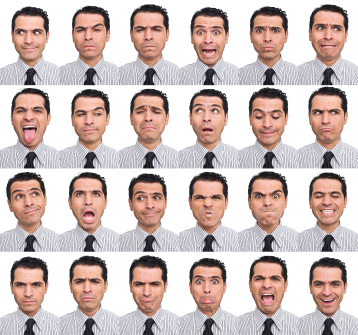
Because I'm teaching a course called "Keeping the Emotions in Check" later this month, I'm very interested in what's going on out there on this topic. In fact, after reading a lot of what's out there, I can tell you that the content I deliver will provide more perspective than the title of my course suggests, and will go beyond what many recommend as "control."
The course is aimed at folks struggling with, or interested in, ways of regulating and managing emotions in the workplace. You might guess that the no one would enroll in a course like this if everything were working out for them on all fronts without a hitch—emotional challenges are alive and well in the workplace.
The natural reaction to things not working so well is to "take more action" and "exert more control." True, some emotional situations call for immediate action and control, and even special training to handle. But the vast majority of emotions in the workplace are best treated long before they reach a crises point—or even an uncomfortable point.
I believe that thinking in terms of "taming" and "controlling" emotions is an approach that is mostly necessary and applicable when we don't have an overall emotional strategy.
Read More...
How We Give Away Self-Leadership

My self-leadership is self-authority—my power to author my life, from the inside out. It's my freedom to make choices that make sense to me, regardless of outside influence. This doesn't mean that I don't factor in consensus belief, or that I dismiss what others think. It does mean that when I'm on my game, the buck stops with me, and I like it that way.
How do we give our leadership away? Let us count the ways:
- To doctors, lawyers, scientists, pills and diet books, and experts on TV and other media...
- To our spouse, our friends, our kids, and unwritten family rules...
- To clients, bosses, co-workers, company culture...
- To religious leaders, anti-religious leaders, political ideas, fashion trends, and even the weather...
- False or limiting beliefs and cognitive distortions.
- You name it.
Degrees, certifications and titles are all products of some amount of consensus agreement and couldn't exist without it. We invest our power in pills and concoctions, and "proven" science (I once read that only 1 in 3 people have the predicted reaction to any pharmaceutical. Advil is a miracle drug for me, and does nothing whatsoever for my wife). Read More...
Dare not to Compare

Since comparing ourselves to others is so often a happiness killer, and since comparing ourselves to others takes energy away from achieving our own desires, I am devoting this blog installment to this favorite past-time of overachievers, and the chronically unhappy—and most of the rest of us.
First, I’m going to call out comparison game, then provide an alternative approach for those of us who would like to dare not to compare, and enjoy ourselves and others free from this zero-sum distraction from true happiness.
Are You a Thinker or Feeler?

You’ll rarely, if ever, hear someone called a “oversensitive hard-ass” or a “cold bleeding-heart.” There’s Probably a good reason for that. Even those of us who are not familiar with Jungian personality type (Please see “About Type” at the end of this blog installment) will admit that some folks appear to decide with their heart, and others with their head. Once more, we sometimes find our opposite (of our own preference for decision-making) a bit annoying, and reserve pejoratives like “hard-ass” or “wussy” for those who have decision-making priorities so frustratingly different from our own.
It's a fool who will use his or her favorite tool for every task, instead of the best tool—or best combination of tools—for the work at hand.
Yes, some folks default to making decisions based on facts, data logic; some folks choose on values, potential impact on relationships, emotional cues. That accepted, it’s important to recognize that both ways of approaching choice are rational, or thought-based processes, and the only difference is what kind of information is prioritized in the decision-making process. After all, thinkers feel deeply, and many feelers are brilliant at logical thinking. Read More...
Gifted, ADHD, or Both?

By the way, if your child was diagnosed with ADHD, or is labeled an underachiever, he or she is in good company. Famous ADHD-ers include Steven Spielberg, Bill Gates, Albert Einstein, Thomas Edison, Ann Bancroft, and many more. Underachievers (in school) included Charles Darwin, Carl Jung, Albert Einstein, Thomas Edison, Gauguin, Turner, Edouard Manet, and Rodin. These are but a few examples!
A few days ago, my wife of 31-years proclaimed to me that I was “borderline gifted.” Now depending on your own self-image, you might have received such a pronouncement as either an insult, or a compliment. Coming from Sue, who is a “show-me” kind of gal, it was indeed a compliment, and my response was hearty laughter. What did I do to earn this borderline gifted status? What did I need to do to achieve full-fledge “gifted” rank? It was just too-funny.