Business Life
How Love Makes a Leader a Leader
19/Tuesday/2011 02:35 PM

Free Download, "Leadership as Connection" (Link at the End of this Post)
I’ve always thought that there was more to work than the work. We give our work meaning. Without the meaning we give to it, work seems like just “moving stuff around.” This is true whether that "stuff" is ideas or services or widgets or widget parts. When we get too serious about the moving stuff around part, and don’t balance that with the human-value part in the equation, well, work’s not as fulfilling or fun (and make no mistake, fulfillment and fun are big parts of employee engagement).
What’s love got to do with it? Love makes a leader a leader.
~Lucira Jane Nebelung
Sure, whatever we do serves others, and creates new opportunity, and creates value. Nevertheless, that value is quite literally undeliverable unless there is a “someone” to perceive it, and receive it.
When I’m working with clients, I like to coach them toward both bringing more of who they are to their work, while appreciating the rich diversity of personality and value among those with whom they share the workspace. This sort of mental/emotional practice can add a dimension to our business lives that makes more engaging and rewarding. Within the space of this approach, it is easier to both deliver and receive value.
Yes, “who we are” matters in our work, and some companies are stretching to transform their practices and culture to encourage this awareness, and invite greater employee engagement, performance, and work satisfaction. Still, it’s a strange thing how many of us cling to rather antediluvian, mechanical, management practices—approaches that in the best cases, invite mediocre engagement, and in worst cases, are quite dehumanizing.
Now, against this backdrop: is the business world really ready to talk about love in leadership?
Enter my colleague, Lucira Jane Nebelung, who has made a well-researched, and eloquent case for doing just that: Read More...
Comments
Emotions in the Workplace
04/Monday/2011 04:50 PM
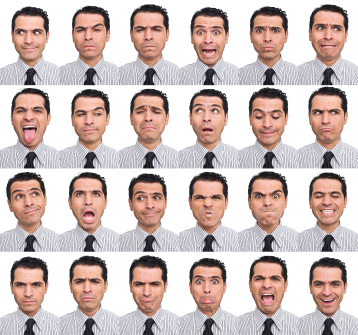
Because I'm teaching a course called "Keeping the Emotions in Check" later this month, I'm very interested in what's going on out there on this topic. In fact, after reading a lot of what's out there, I can tell you that the content I deliver will provide more perspective than the title of my course suggests, and will go beyond what many recommend as "control."
The course is aimed at folks struggling with, or interested in, ways of regulating and managing emotions in the workplace. You might guess that the no one would enroll in a course like this if everything were working out for them on all fronts without a hitch—emotional challenges are alive and well in the workplace.
The natural reaction to things not working so well is to "take more action" and "exert more control." True, some emotional situations call for immediate action and control, and even special training to handle. But the vast majority of emotions in the workplace are best treated long before they reach a crises point—or even an uncomfortable point.
I believe that thinking in terms of "taming" and "controlling" emotions is an approach that is mostly necessary and applicable when we don't have an overall emotional strategy.
Read More...
Anyone Can Train, Right?
04/Monday/2011 09:22 AM

From time to time, my blogs will come straight off one of my answers to a LInkedIn question. In this case, one poster queried the ASTD group as to how readers would respond to the belief that confronts many an educator, trainer, or training manager in the business environment. What is this belief, and who holds it?
The "who," in this case, is any decision-maker not in the company's performance improvement or training organization, but who has input or sign-off on the training that will happen in his or her department.
The belief is none other than (drum roll): "Training is easy, and anyone can train".
This usually means that our decision-maker has a subject matter expert (SME) on the staff, who they feel they can put in a training or conference room, or put on a conference call, and this SME will present to everyone, and everyone who hears the presentation will go away and do what they just learned.
Good luck with that, right?
Read More...
Are You a Thinker or Feeler?
04/Sunday/2010 06:57 PM
(And a Little Bit about Dog Training)

You’ll rarely, if ever, hear someone called a “oversensitive hard-ass” or a “cold bleeding-heart.” There’s Probably a good reason for that. Even those of us who are not familiar with Jungian personality type (Please see “About Type” at the end of this blog installment) will admit that some folks appear to decide with their heart, and others with their head. Once more, we sometimes find our opposite (of our own preference for decision-making) a bit annoying, and reserve pejoratives like “hard-ass” or “wussy” for those who have decision-making priorities so frustratingly different from our own.
It's a fool who will use his or her favorite tool for every task, instead of the best tool—or best combination of tools—for the work at hand.
Yes, some folks default to making decisions based on facts, data logic; some folks choose on values, potential impact on relationships, emotional cues. That accepted, it’s important to recognize that both ways of approaching choice are rational, or thought-based processes, and the only difference is what kind of information is prioritized in the decision-making process. After all, thinkers feel deeply, and many feelers are brilliant at logical thinking. Read More...
You’ll rarely, if ever, hear someone called a “oversensitive hard-ass” or a “cold bleeding-heart.” There’s Probably a good reason for that. Even those of us who are not familiar with Jungian personality type (Please see “About Type” at the end of this blog installment) will admit that some folks appear to decide with their heart, and others with their head. Once more, we sometimes find our opposite (of our own preference for decision-making) a bit annoying, and reserve pejoratives like “hard-ass” or “wussy” for those who have decision-making priorities so frustratingly different from our own.
It's a fool who will use his or her favorite tool for every task, instead of the best tool—or best combination of tools—for the work at hand.
Yes, some folks default to making decisions based on facts, data logic; some folks choose on values, potential impact on relationships, emotional cues. That accepted, it’s important to recognize that both ways of approaching choice are rational, or thought-based processes, and the only difference is what kind of information is prioritized in the decision-making process. After all, thinkers feel deeply, and many feelers are brilliant at logical thinking. Read More...